
The Relational Poverty of the Digital Nomad: What 3.5 Years of Travel Taught Me About Connection

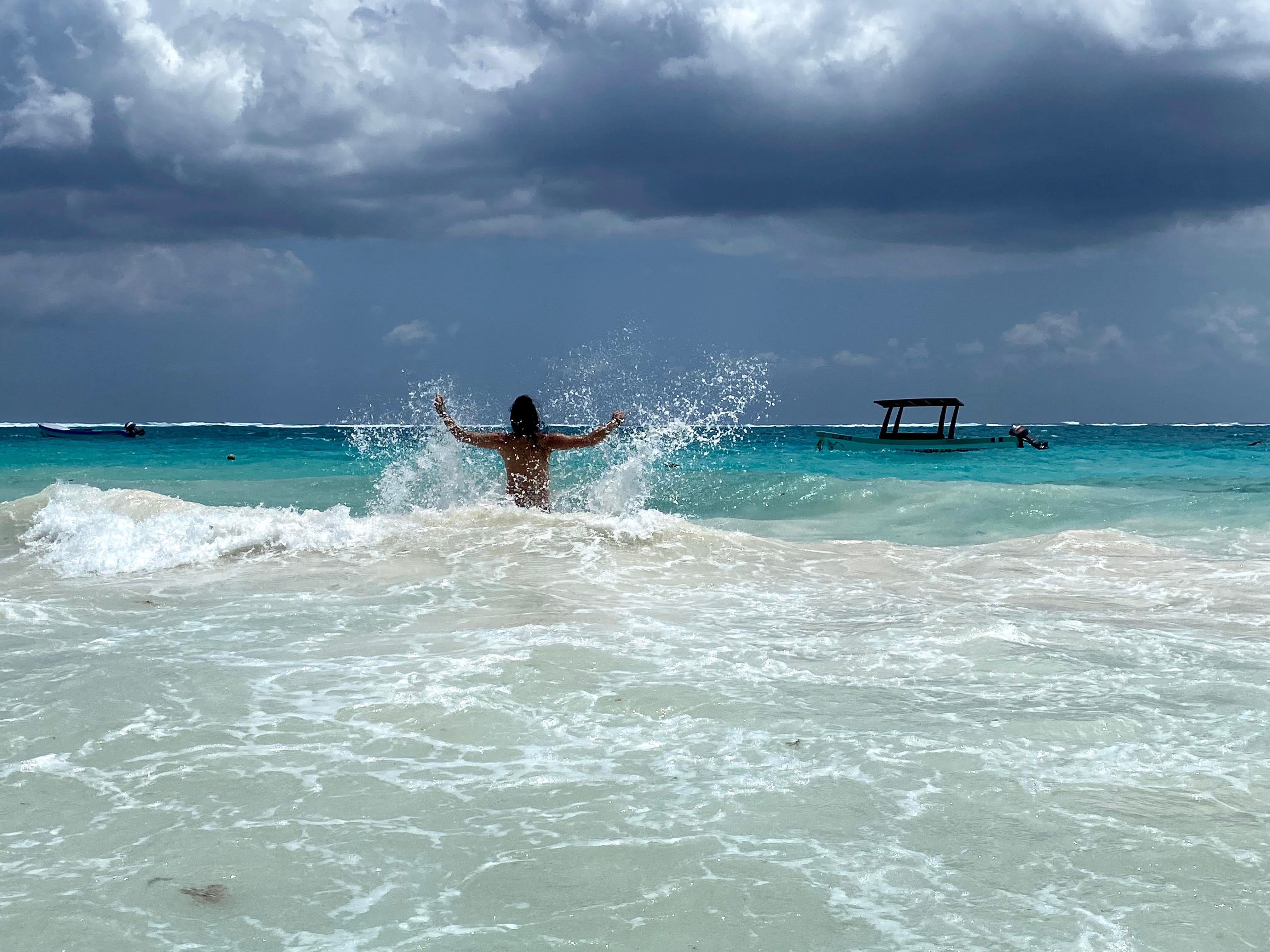
I had everything the Instagram algorithm promised would make me happy.
Ayahuasca ceremonies with Shipibo shamans in Peru. A year in Bali doing silent retreats and ecstatic dance. Teaching tantra in exchange for a coast-to-coast bus tour through Mexico. Six months in Bangkok studying sexual alchemy with Mantak Chia. A month-long tantra intensive in India.
I was living the dream.
I was also exhausted, lonely, and watching my relationship dissolve in slow motion.
[Writing this from Costa Rica, where I’ve returned—not as an escape, but as an expansion from the stable base I finally built in Vancouver...]
The Timeline Nobody Talks About
Here’s what the nomad lifestyle actually looked like:
2020: Left my hometown with a new love. Fled Canada as borders closed. The universe said GO and we listened.
Tulum, Mexico: Joe Dispenza workshops. Mind-bending reality. Manifesting parking spots and life changes.
Peru: Deep in the Amazon with the shamans. Consciousness shot through a kaleidoscope into dimensions where time doesn’t exist.
Mexico coast-to-coast: Teaching tantra workshops in exchange for a bus tour. Adventure on tap.
San Jose, Costa Rica: Eight months. Crypto, AI, jungle wisdom.
Bali: One year. Silent retreats. Ecstatic dance. The whole conscious living ecosystem.
India: Month-long tantra retreat. The source.
Bangkok: Six months. Qi Gong mastery. Sexual alchemy. The inner smile.
2023: Came home. Relationship ended. Exhausted.
By every external metric, I had lived an extraordinary life. By every internal metric, I was relationally impoverished.
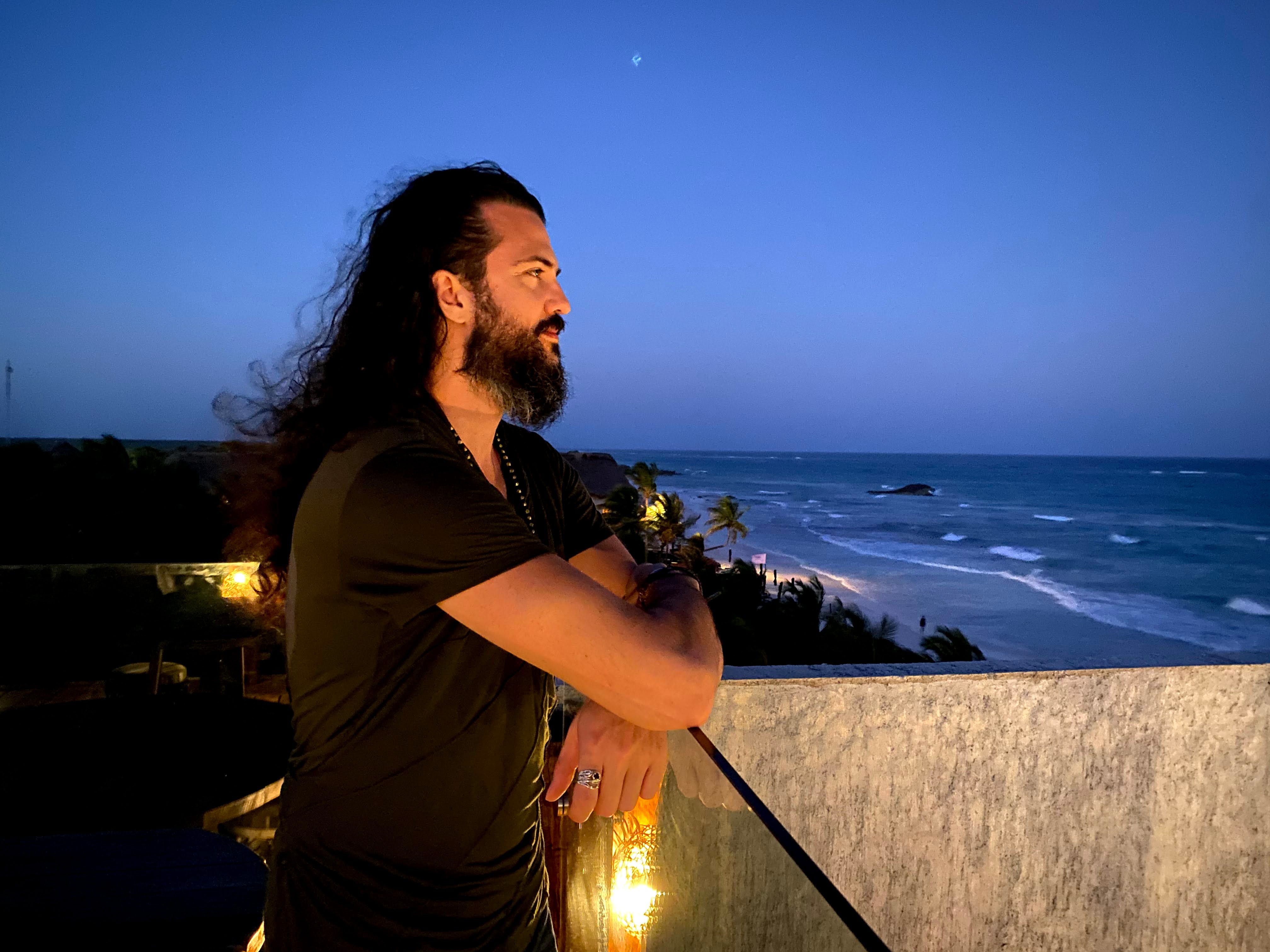
The Illusion of Connection
Christina Lane recently wrote something that stopped me cold:
“When your relational world is small, labels become very tempting. If you only have one deep, real-life relationship, you lose context. Without comparison, everything feels personal and permanent. You can’t tell the difference between what isn’t working here and what consistently shows up everywhere.”
She was writing about people who live disconnected lives. But she could have been describing the digital nomad perfectly.
Here’s the checklist of “connection” I had while traveling:
Online coworkers ✓
People I paid (coaches, healers, teachers) ✓
Friends I saw occasionally (at festivals, retreats) ✓
Groups I shared in (WhatsApp, Telegram) ✓
Social contact with clear limits ✓
Christina names what’s missing:
“They have online coworkers. People they pay. Friends they see occasionally. Groups they share in. Social contact with clear limits. But, there is a barrier. There is no intimacy.”
No intimacy. That’s the thing nobody tells you about the nomad life. You can have a thousand connections and still have no one who really knows you.
What Intimacy Actually Means
Christina defines it precisely:
“Intimacy is taking out the trash with no makeup on. Intimacy is someone seeing that you forgot to pay a bill on time. Intimacy is being disappointing or inconvenient and staying connected anyway.”
Read that again.
Intimacy isn’t the transcendental sex on the beach in Bali. It isn’t the soul-recognition in a cacao ceremony. It isn’t the deep sharing at a tantra retreat.
Intimacy is being seen when you’re NOT performing.
And here’s what nomad life systematically prevents:
Being seen in your ordinary life — because you don’t have one
Being disappointing — because you can always leave
Being inconvenient — because the relationship has an expiration date
Being held accountable over time — because you’ll be in a different country next month
I had extraordinary experiences with extraordinary people. But I never had someone see me forget to pay a bill. Never had someone watch me fail at something mundane and stay anyway. Never had someone tell me I was being an asshole and stick around to see if I’d change.
When Your Partner Becomes Your Only Mirror
Here’s where it gets dangerous for nomadic men.
Christina writes:
“When you have functional communication at work, with your kids, with people you live with, and with people you interact with regularly, you get feedback. Real feedback. You can adjust without everything feeling existential.”
When you’re traveling with a partner, they become your ENTIRE relational world. Every trigger, every wound, every pattern—it all plays out in one container. No external feedback. No community to reality-check you.
I lived this with my partner for 3.5 years. We created what I romantically called a “hermetic crucible”—a sealed container where we could transform together.
What I didn’t see: we had no external data. No friends who knew us both well enough to say “hey, that pattern you’re running? It’s not her. It’s you.” No community watching us over time.
So when conflicts arose, every fight felt existential. Because there was no comparison. No way to know if “this isn’t working” was about HER or about ME.
The labels became irresistible.

The Label Trap
Christina nails this:
“So often these terms are used as shorthand for discomfort, incompatibility, or pain we don’t yet know how to contextualize. They give relief, not clarity. More complex, they allow us to stop asking questions.”
“She’s controlling.”
“She’s avoidant.”
“She’s emotionally unstable.”
I used every one of these labels at some point. They felt TRUE. They gave RELIEF.
But Christina offers a harder truth:
“When the same patterns keep emerging, it’s very, very unlikely that you simply chose wrong again and again. Much more often, you are evoking a similar response in different people.”
Here’s what I couldn’t see while traveling: the same patterns kept emerging within my relationship. Different cities, same dynamics. The fights we had in Costa Rica looked suspiciously like the fights we had in Bali. The disconnection in Bangkok echoed the disconnection in Peru.
And because I was always moving—new city, new context, new adventure—I could blame geography. “We’re just stressed from the visa situation.” “Things will be better once we settle somewhere.” “It’s the humidity.”
But the patterns kept emerging. Same relationship, same dynamics, different backdrops. Eventually I had to ask: what am I doing to create this?
The Grief Nobody Names
Here’s something I never let myself feel while traveling: every time we moved, my nervous system was just beginning to settle.
I was just starting to make friends. It takes me time—I’m not someone who bonds instantly. And right when the connections were forming, we’d pack up and leave.
Costa Rica was the hardest. I wanted to stay. She wanted Bali. I eventually convinced myself I wanted Bali too. But there was this disowned grief underneath—the loss of friendships that were just beginning to root.
It echoed something older. We moved a lot when I was a kid too. Same pattern: just starting to belong, then gone. The grief I never processed as a child was replaying in my adult life, and I couldn’t see it because I was too busy being “adventurous” and “free.”
Now, in Vancouver, I’m here to stay. Not because I can’t travel—I’m writing this from Costa Rica. But because I want to build lifelong friends in my 40s. I want people who’ve known me for a decade, not a retreat. I want roots deep enough that leaving becomes expansion, not escape.
What “Light Friends for Years” Actually Costs
Christina commented on one of my articles recently with something that hit hard:
“I have only had a small taste of nomadic life but it absolutely limits community building and I don’t think people loving it see how having someone pop in on WhatsApp to vent or having light friends for years isn’t a relationship where you can really be challenged and uncomfortable.”
This is the nomad friendship model:
Festival friends: See them once a year, intense for 3 days, then back to Instagram likes
Retreat friends: Deep sharing in sacred space, then dispersed across continents
Digital friends: Always available on WhatsApp, never actually present
Travel friends: Intense for 2 weeks while your paths cross, then emoji reactions forever
None of these people can challenge you. None of them see you fail. None of them will tell you when you’re running a pattern that’s hurting you.
They’re “light friends for years.”
And light friends for years isn’t intimacy. It’s the appearance of connection without the exposure that makes connection real.
The Intensity Addiction
Here’s something my somatic coach helped me see: I learned to create instant intimacy.
When you’re a nomad, every connection is compressed. You have 2 weeks, not 2 years. So you learn to go deep FAST. Soul recognition on day one. Transcendental sex immediately. Life story exchange over the first coffee.
This felt like a superpower. I could create “connection” anywhere.
But it was a trap.
Because I never learned to be ordinary with someone. Never learned to let intimacy build slowly over months of mundane interaction. Never learned that real depth comes from sustained presence, not intensity.
I mistook drama for depth. Mistook intensity for intimacy. Mistook transcendence for connection.
Christina’s framework helped me understand: I was going “three feelings ahead”—processing emotional undercurrents before my partners had even felt them. Creating overwhelm that looked like “she can’t handle depth” when really I was just moving too fast for any human to track.
The One Thing They Need to Know
When I came home to Vancouver, I made a decision.
Not MANY connections—but DEEP ones. People who like to work, thrive, and talk about existence. People who would see me over months, not days.
And I discovered something: the one thing people need to know before they’ll really open up.
“I’m not going anywhere. My intention is to stay right here.”
That sentence changed everything.
Because intimacy requires continuity. Real feedback requires time. Being challenged and uncomfortable requires someone who will still be there next month to see if you changed.
The irony? Now I CAN travel. I recently bought a one-way ticket to Costa Rica for a months-long stay. But it’s different now. I’m not escaping—I’m expanding from a stable base. I have roots. I have people who know me. I have a home to return to.
The nomad life isn’t the problem. The ONLY life being nomadic—that’s what creates relational poverty.
The Invitation for Nomadic Men
Christina wrote something that lands differently now:
“What I fear is actually breaking the world right now is how so many men especially feel labeled as trash and tossed to the side by life. When the reality is so much more complex and messy. If they could sense just a little bit of good in themselves imagine how much better off we all would be.”
If you’re a man who travels full-time, you’re not broken. You’re not “bad at relationships.” You’re operating in a context that makes real intimacy almost impossible.
The questions to sit with:
Who knows you when you’re NOT performing?
Who has seen you fail and stayed?
Who would tell you if you were being an asshole?
Where are you getting real feedback about how you affect people?
Who isn’t going anywhere?
You don’t have to stop traveling. But you might need to build something that doesn’t move. A home base. A community. People who aren’t going anywhere.
Because the one thing they need to know before they’ll really open up:
You’re not going anywhere either.
Related reading:
Christina Lane’s “Stop Calling People Toxic When Something Isn’t Working” — the article that inspired this piece
My own journey through this: “Every Woman I’ve Loved Was Trying to Tell Me the Same Thing”
The decision to travel differently: “Why I’m Buying a One-Way Ticket to Costa Rica Instead of the Moon Party”
Where the journey started: “From Lockdown to Enlightenment”
If you’re a nomadic man trying to build real connection, I’d love to hear your experience. What has traveling cost you relationally? What have you built despite the movement? Drop a comment or reach out.
Keep bending light,
Cian